You can view this compressed version of our final piece here (it is better not to open full screen); or better still, watch it on the DVD.
Showing posts with label Shauna. Show all posts
Showing posts with label Shauna. Show all posts
Monday, 22 April 2013
FINAL COURSEWORK
You can view this compressed version of our final piece here (it is better not to open full screen); or better still, watch it on the DVD.

Tuesday, 2 April 2013
Evaluation of Appeal to Audience
This is a presentation in which we try to explain what we think our audience will think and feel as they watch our opening. It is intended as a DVD extra but is viewable on here, although the reduced quality because of uploading maximums makes it less pleasant to view like this.
Monday, 25 March 2013
Evaluation of Progress from Prelim Task to Main Task
1. Progress in research and planning


Progress
Progress
Progress from prelim to final was that we were much more skilled with the camera which gave us better camera movements and the choice to use different movements that before we couldn't.
4. Progress in editing
Prelim
Very little editing needed - mostly shot / reverse shot and some matches on action, because that was what was specified in the task. We did our best with this but were held back by the quality of our filming and the lack of context of our task - we didn't know what we wanted the piece to mean so could only focus on continuity editing rather than anything more imaginative.
Final
Much more creative and imaginative editing beyond continuity:
As you can see, our editing is vastly improved as we are now thinking of it as a way of creating meaning for our audience rather than just putting scenes on a timeline and cutting them together.
Prelim
- We did not have a target audience or genre when filming this
- We did very little planning and what we did plan took us 5 minutes
- We did write a short script but changed this just before filming
- we first of all did our task wrong so therefore had to redo this
- we did not relate our techniques to our overall genre/ plan
- we only did not think of what music to put in or what would suit it
- We planned a lot for our final task and put a lot of time and effort into it
- We watched many films that related with our genre so therefore could get ideas from this
- We also saw how they had specifically targeted an age and genre in the opening 2 minutes
- We also noticed common techniques for the genre in terms of camera angles, sounds, editing and mise-en-scene.
- We also added in a contact sheet to start off with so that we could plan out each scene
- This helped us to know exactly what we had to do regarding camera angles, positioning and dialogue
- We also researched the sort of music we had to include that would go with our genre
- We also researched how much dialogue appear in the opening of a Thrillers
- Here are some of the films we researched:
 |
| Evidence of extensive research |
Progress
- This helped us focus on specific components that were important to include in the final task
- This helped make our genre easier to identity
- This helped us know exactly what we were doing when filming as we had planned and researched many ideas
Some examples of our research includes :
http://dancingpensblog.blogspot.co.uk/2012/12/researching-target-audience_5.html
2. Progress in storyboarding and scripting
Prelim
For our prelim task we used 5 minutes of planning just before we filmed drawing up a script, we didn't even make a storyboard. This meant that we where very disorganised and at times didn't know what to do and sometimes forgot what our lines were, making it harder to edit together than it should have been.
When looking for location we just found the first free room. The location wasn't ideal because we didn't have enough room to place the camera and had to resort to balancing it on a table. It also added nothing to our piece and did not set a context.
Final Task
For our final task we made a storyboard and an animatic.
We first put together the storyboard to give us a general overview of the storyline this was changed and drafted many times until we got it perfect.
We then made an animatic using post-its to depict the first 2 minutes. The initial storyboard helped us with it but we still changed and edited the pictures until we were happy with them. The benefits of using the animatic are that we were able to experiment with camera angles and easily plan what dialogue was going where and where the credits could go while staying within our time limit.
Storyboard


2. Progress in storyboarding and scripting
Prelim
For our prelim task we used 5 minutes of planning just before we filmed drawing up a script, we didn't even make a storyboard. This meant that we where very disorganised and at times didn't know what to do and sometimes forgot what our lines were, making it harder to edit together than it should have been.
When looking for location we just found the first free room. The location wasn't ideal because we didn't have enough room to place the camera and had to resort to balancing it on a table. It also added nothing to our piece and did not set a context.
 |
| Poor choice of location |
Final Task
For our final task we made a storyboard and an animatic.
We first put together the storyboard to give us a general overview of the storyline this was changed and drafted many times until we got it perfect.
We then made an animatic using post-its to depict the first 2 minutes. The initial storyboard helped us with it but we still changed and edited the pictures until we were happy with them. The benefits of using the animatic are that we were able to experiment with camera angles and easily plan what dialogue was going where and where the credits could go while staying within our time limit.
Storyboard


Animatic
 |
| Evidence of shot planning |
 |
| Linking shot choice to effect |
Progress
- Made filming a much more smooth operation with less glitches.
- Nobody forgot or didn't know their lines because we had been able to rehearse them.
- Locations were all perfect as we had checked them before.
3. Progress in camera work
Prelim
- Didn't have enough space to place the camera so had very limited angles.
- Didn't fully know how to use camera and recorded over our work a couple of times.
- Had trouble with tripod causing a couple shots to be slanted.
- Had to finish early because we ran out of battery on the camera because we left it on when not filming.
- Had trouble with our panning shot as we had not practiced it.
 |
| Framing here not right for over-the-shoulder shot |
 |
| Match on action with next shot not right - right arm forward here... |
 |
| ... and back in next shot |
Final Task
- Practiced using the camera and tripod resulting in much smoother movements and took out the ones we couldn't do
- Where able to use a wider range of camera angles and movements and ones that would fit in with the movie.

Here we used a panning shot which we practiced many times resulting in a very smooth action.

 |
| We used a tracking shot here which we practised many times because we found it very difficult but thought it would work really well and managed to get a good one on the day down to practice. |
 |
| Extreme close up good choice to convey aggression |
 |
| Better framed shot |
 |
| Interesting angle and good continuity with previous shot |
Progress from prelim to final was that we were much more skilled with the camera which gave us better camera movements and the choice to use different movements that before we couldn't.
4. Progress in editing
Prelim
Very little editing needed - mostly shot / reverse shot and some matches on action, because that was what was specified in the task. We did our best with this but were held back by the quality of our filming and the lack of context of our task - we didn't know what we wanted the piece to mean so could only focus on continuity editing rather than anything more imaginative.
Final
Much more creative and imaginative editing beyond continuity:
 |
| Desaturated to create effect of flashback and echo added to sound |
 |
| Stop motion used to create ident |
 |
| Fade to black to show ellipsis |
 |
| Use of Live Type to create effective title |
 |
| We added sound beneath close ups of Shauna to show where her mind is |
 |
| Cross-dissolve to show transition of mood and location |
Sunday, 10 March 2013
Evaluating the use of codes and conventions of my opening 2 minutes
1. Text
- Red text which appears on the tree like blood as the victim runs away slowly dragging her hand across the tree
- Fits in well as the victim has blood all over her hand so it is made to look like the blood from her has smeared on the tree to spell out the title
- Suits the mysterious feel of our genre and creates sense of tension.

2. Credits
- Plain white writing which appears on the tree as the victim runs past from the right side of the screen to the left as we wanted to keep it serious we did not want to use crazy, animated type of credits as the audience may not take us so seriously
- We kept if plain so it was enough to see but not enough to distract the audience from viewing the film - this is the convention in our genre where credits tend to be subtle.

3 & 4. Characters
- Thrillers are usually about a female victim who is in danger and finds herself trying to escape so we have followed conventions here.
- Male characters in thrillers tend to be the person committing a crime. They tend to look rugged and have a bad past - again, we have followed this stereotype.
- Female characters in thrillers tend to be the victim. This is because females are stereotypically seen to be more vulnerable and weak
- Our main character is a teenage girl who is portrayed to be weak and scared
- The use of female victims is common in thrillers. These kinds of characters are seen in most thrillers such as ‘The Town’. This is a movie set in Charlestown about a group of bank robbers who take a women hostage. All of the bank robbers are adult males and the victim (the person taken hostage) is a middle aged female
- The person committing the crime is a young male with a vendetta against the female main character.
- The hero that we have used in our film is a male which helps to give a contrast between the male characters.
- The hero is an older character so that he seems more trusting. People think that older people are wiser so therefore trust them more - this is another genre convention.
- The fact that the hero is a police man helps to trust him more as police are seen to help people in need as it is there job.


5 & 6. Mise-en-scene
- Typically, thrillers are set in a large rural isolated location
- Thrillers often use known actors to promote themselves and to help the audience understand that it is not real, although on the other hand, they cast unknowns so you feel less sure they will survive to the end of the film. Also the victims are usually innocent looking people so that it creates a sense of sympathy towards them.
- The criminals are normally people who are naturally scary looking and are not presented a nice light. They are usually actors that have previously played the same role in other well known thrillers.
- Props such as weapons, knifes, blood and torn clothing help to give a sense of danger and help the audience see the genre of the film. The blood and tears on the victims costume tells the audience that she has been attacked. Our use of props will be familiar to audiences.
- The look on the victims face when running and the manner in which she is running in shows that she is being followed and that she is trying to escape from something or someone. By having only one earring in, and the ear with no earring having blood smeared down it also shows that she has been attacked.
- The main location we used was an isolated forest. We used this because it gave a sense of fear and unawareness. The day we filmed was a cold day therefore making it look more scary as the floor was more white than green from the frost on the grass. Also, spider webs can be seen clearer when covered in ice and snow therefore making the natural environment look more scary and unapproachable.
- The victim was wearing little clothing in what could be seen as a cold environment making her look more vulnerable to not only the male committing the crime but also the place she is in.
- The police officer in image 6 is wearing a suit. This shows that he is important and is a person of power contrasting the villain who is wearing all black rugged clothes (also badge close up- symbol of his authority).
- The police officer is a middle ages man which is the stereotypical view of a police officer. This is why we cast this person.


7 & 8. Camera Work
- We used many close ups in our opening to show the importance of certain characters. We also did this by giving the female main character the most screen time. This shows the audience that she is the person who will be seen the most in the rest of the film.
- The face of the person who committed the crime is not shown in the whole of the opening. Extreme close up used to create impressionistic feel. This is crucial as if they are shown, there will be nothing for the audience to work out and there will be no need to finish watching the end of the film. This is typical of a film in this genre.
- An over the shoulder shot is used in the police station. The camera is behind the female main character looking towards the police officer. This shows the emotions on the policemen’s face showing that he is worried for the girl.
- There is a 360 degree shot surrounding the female main character. This shows the costume and makeup she is wearing telling the audience that she is in danger.
- We used a high angle shot to give a sense that the criminal is watching the victim without her knowing. We did this shot by climbing up a tree and having the camera look down from the tree whilst the victim runs past.

9. Editing
- We overlayed some of the opening shots with a desaturation effect to make hint that these events are not in real time. This also helped cover the criminals face keeping it hidden from the audience. We did this in the editing package (Final Cut Express).
- There is a lot of cross cutting between the victim being attacked and her running from the scene of the crime. This was fast paced and created tension. This lets the audience know that it is an important part of the movie and will be a reference for the rest of the movie. This editing style is a common choice for psychological thriller where the audience needs to feel disorientated.

10. Sound
- Non-diegetic music is used to build up tension and atmosphere when the victim is being attacked
- Dialogue is very little in the two minute opening, the fact that the victim hardly speaks so when she does it is very important. The fact she does not speak shows she is very worked up and scared and what happened and does not want to speak
- The close up of the attacker with him laughing, helps to build up tension as he does it in a very aggressive way which puts the audience at the edge of their seats
- The use of echos from the past in the victim’s head in the police room is used to show that the victim is scared about what happened and cannot forget about it - this distortion of sound fits with the idea of mental distortion and so helps create the genre tone.
- The loud screaming used by the victim in the flash backs are used to show the audience that the attacker is hurting her and that he is actually attacking her so they know who is good and bad in this situation
Thursday, 7 March 2013

Saturday, 23 February 2013
Evaluation of Distribution Institution
Our DVD extra discussion in a compressed version for blog:
From left to right: Megan, Shauna, Cristian
Thursday, 21 February 2013
Evaluate how your Media product represents particular social groups
Evaluation of Gender


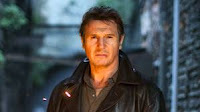
Main Character
- In thrillers female girls/teenagers are normally cast for the role of the victim as they are seen as vulnerable and unable to look after themselves, this is a common and controversial female stereotype.
- Our main character in our film is a female/teenager victim played by myself. This fits into the codes and conventions of a thriller.
- I am seen to be very distressed with the situation and the viewer can clearly see that I have been attacked, by showing me with blood all over my body and a black eye.
 |
| Woman as victim stereotype |
- This shows the audience I have been hurt and therefore feel sorry for her.
- I am also seen as weak as this has happened to her and this fits into the rather disturbing stereotype of women, so in some ways although I like our piece, I can see we have reinforced some not very positive female stereotypes.
- Lacey suggests that thrillers are often used to comment on the role of women in society.
- In films such as ‘Taken’ women are portrayed as being weak and a sexual victim.
- The women are seen as an object to take advantage of.
 |
| Our representation |
 |
| Character from 'Taken' |
- Another film which portrays women in a vulnerable way is ‘Paranormal Activity’ as the women is trying to get away from the ghosts and demons but as she is seen as weak and defenceless she is unable to.
- I can see why there are concerns about this kind of stereotype, but I also understand how it comes about having used the stereotype myself.
- I think this is a tempting stereotype for the genre because having a vulnerable main character creates the tension and sympathy you are looking for instantly and connects with the audience straight away because of the familiarity of the representation.
- You also have to look to the end of the film - our character fights back and so is like Clover's 'final girl', which is a more powerful representation. It would be more damaging if she accepted the abuse and this was the more common stereotype.
Males
- The attacker is a young male which also fits into the codes and conventions of the genre thriller. Every time the attacker is shown on screen, it is seen with a black and white colour to suggest to the audience this is the villain of the film and should be wary of him.
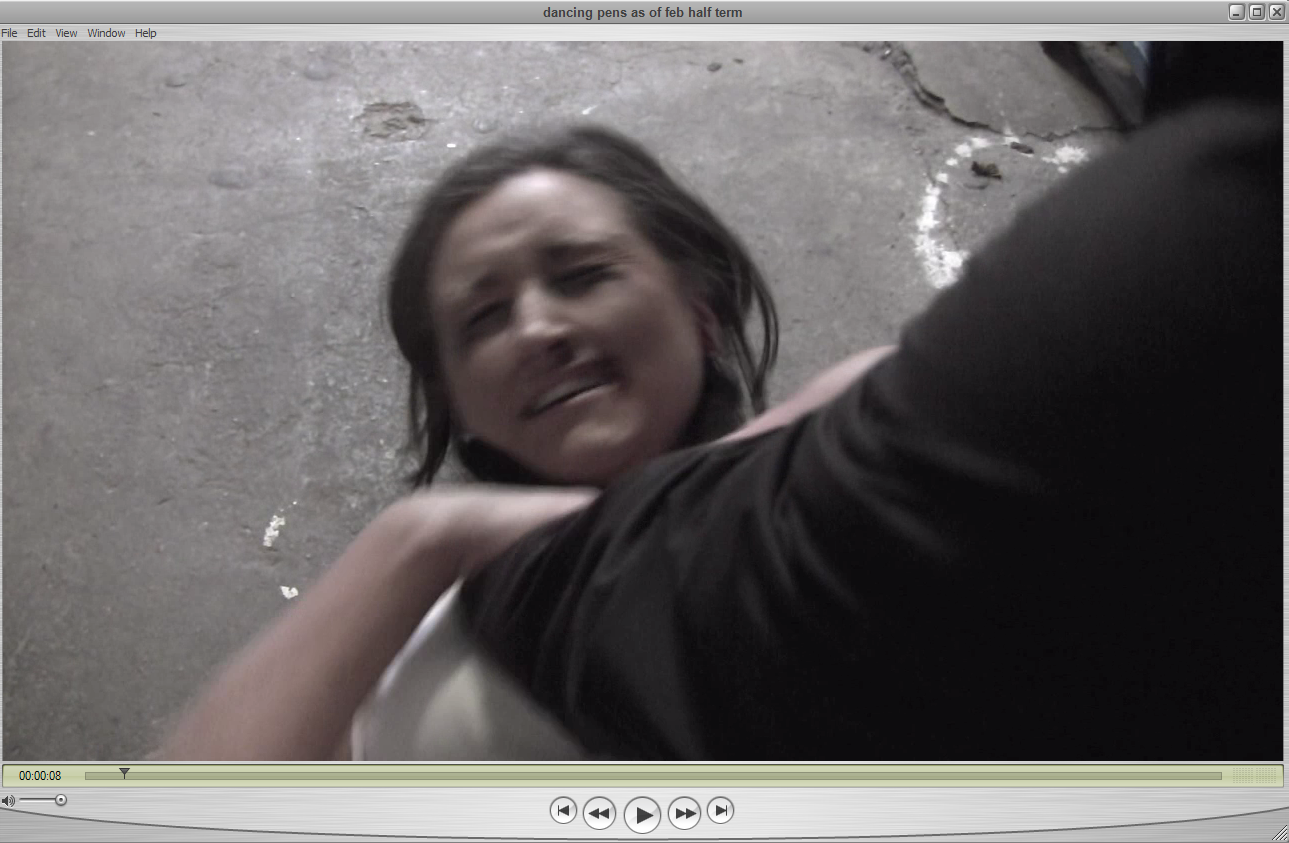 |
| Our attacker |
- The stereotype that men are stronger and therefore are likely to be the attacker of the girl.
- In our piece we show an extreme close up of the male attacker grinding his teeth together very aggressively connoting the audience that he is a threatening character.
- This creates a negative representation the attacker. Due to the audience feeling sorry for the girl and knowing he is the one who is caused this to happen to her, the audience automatically feel negatively towards him.
- This is also the case with the male attacker from ‘The Girl with the Dragon Tattoo’
 |
| Girl with Dragon Tattoo |
- This picture is taken from an interesting article that discusses the 'revenge' idea:
- Our attacker is stereotypical - male, physically stronger, hoodie etc. We have done this because we only had two minutes to make an impact. in a real opening sequence you can take things slower. Ours had to be more bold as nobody is going to watch the rest of our film to see how things play out.
- Using the common stereotypes also makes it more believable for those who are influenced by what they read in the press - but this can be seen as cheap maybe as discussed in the article.
- The attacker fits into Lacey's idea of films of this kind enacting a patriarchal social revenge on 'troublesome' groups such as women and teenagers.
 |
| Aggressive representation |
 |
| Current press concern around abuse - society's big fear |
- There is also a contrast between the male characters.
- The police officer is seen to help the girl in need and comes across in a very positive representation.
- There is the use of a shot reverse shot of the conversation between the girl and the police officer showing him caring about the situation and wanting to help.
- He uses a very soft tone of voice to portray he is a caring character.
- Police officers are often seen to caring members of the community and we tried to portrayed this
- Police officers have been seen in the press to be caring members
- In the film ‘Taken’ The dad is seen the be the hero character which is a contrast with the villain who is a male

Our similar representation of a positive take of males

Press representation of a positive take of males
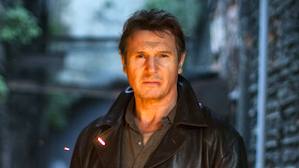
Similar character in ‘Taken’
Overall representation
- The overall representation of women are weak and vulnerable
- They are seen to have less power than men
- The overall representation of men are mixed
- On one hand the villain is seen as negatively as uses power to control and abuse women
- Also the caring character uses his power as the police officer to help the girl in need
Sunday, 17 February 2013
Sunday, 3 February 2013
Wednesday, 23 January 2013


Thursday, 13 December 2012
Photos from Filming
Photos Taken During Filming


Filming the running scenes from different angles.


Having make-up done - we had to be careful to keep topping this up for continuity through the day.

The police station scene - we tried to create shadows using the lamp but the office we used as an interrogation room was small and we were limited in the camera angles we could use. We cleared out all the office equipment and left it bare to create the right feel, and the small space felt quite claustrophobic which is the right atmosphere.


Filming the running scenes from different angles.
Subscribe to:
Posts (Atom)